Tiếng Việt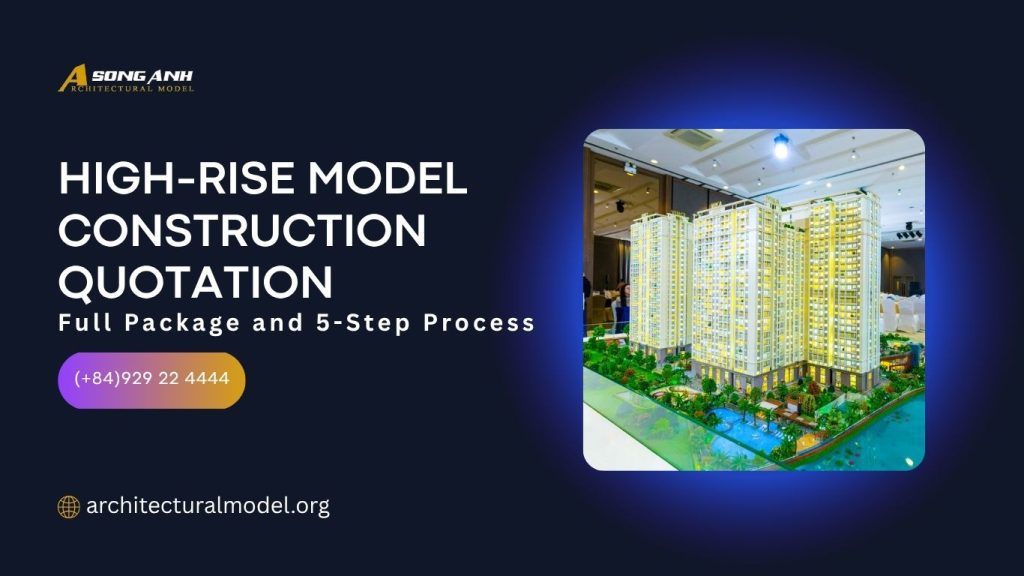
A high-rise model is not merely an architectural replica but a powerful presentation tool that shapes the first impression and enhances a project’s investment appeal.
This article provides a comprehensive overview of the professional model-making process and how to obtain the most transparent and cost-effective full-service quotation for your project.
The Importance of High-Rise Models in Real Estate Projects
A high-rise model is more than just a miniature version of a real project—it allows clients and investors to clearly visualize the project’s scale, 3d design, and location.
The complexity of high-rise projects—volume, amenities, and their relationship with the surrounding landscape—requires a multidimensional presentation tool. The model allows viewers to not only see the exterior form but also sense the layout of amenities, green spaces, and the spatial relationship between building blocks. Clients can easily assess viewing angles, building density, and the precise location of the unit they are interested in within the overall project.
This is especially crucial in persuading high-end clients who value aesthetics, class, and emotional experience above all. A finely crafted high-rise model—meticulously designed with lighting and interactive effects—is the clearest proof of a developer’s professionalism and credibility. The scale model is the indispensable “key” to any luxury real estate marketing strategy.
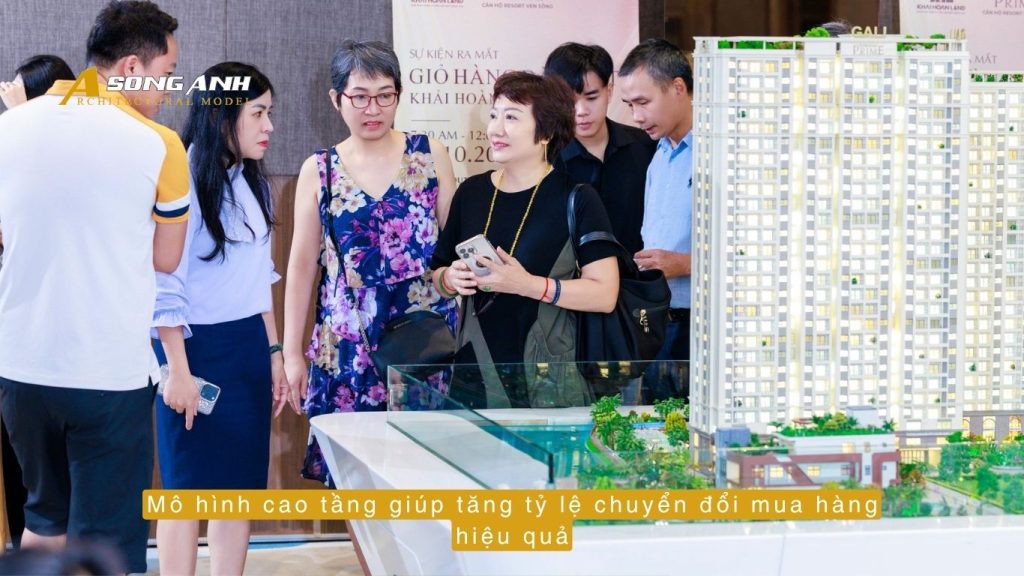
High-Rise Models Help Boost Conversion Rates
A detailed, realistic architectural model can evoke emotions and build trust. It allows clients to experience the project’s space, amenities, and sophistication—significantly improving investment decision rates compared to 2D drawings or 3D videos.
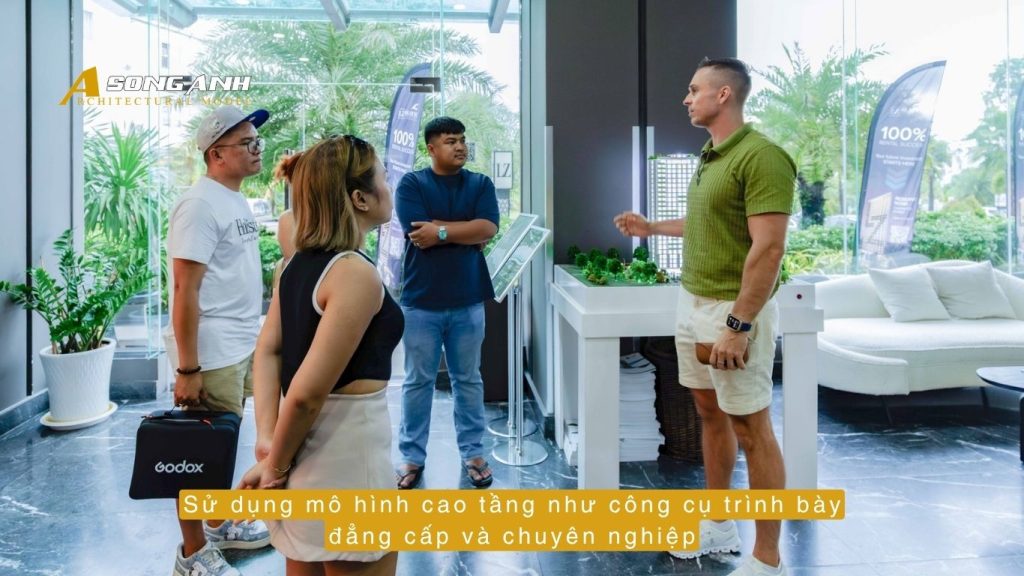
A Premium and Professional Presentation Tool
Displaying a high-rise scale model at sales events or showrooms reflects the developer’s seriousness and prestige. It serves as a powerful visual centerpiece that captures attention instantly.
STANDARD 5-STEP PROCESS FOR HIGH-RISE MODEL CONSTRUCTION
To produce a flawless high-rise architectural model, Song Anh follows a closed 5-step process that optimizes both quality and schedule.
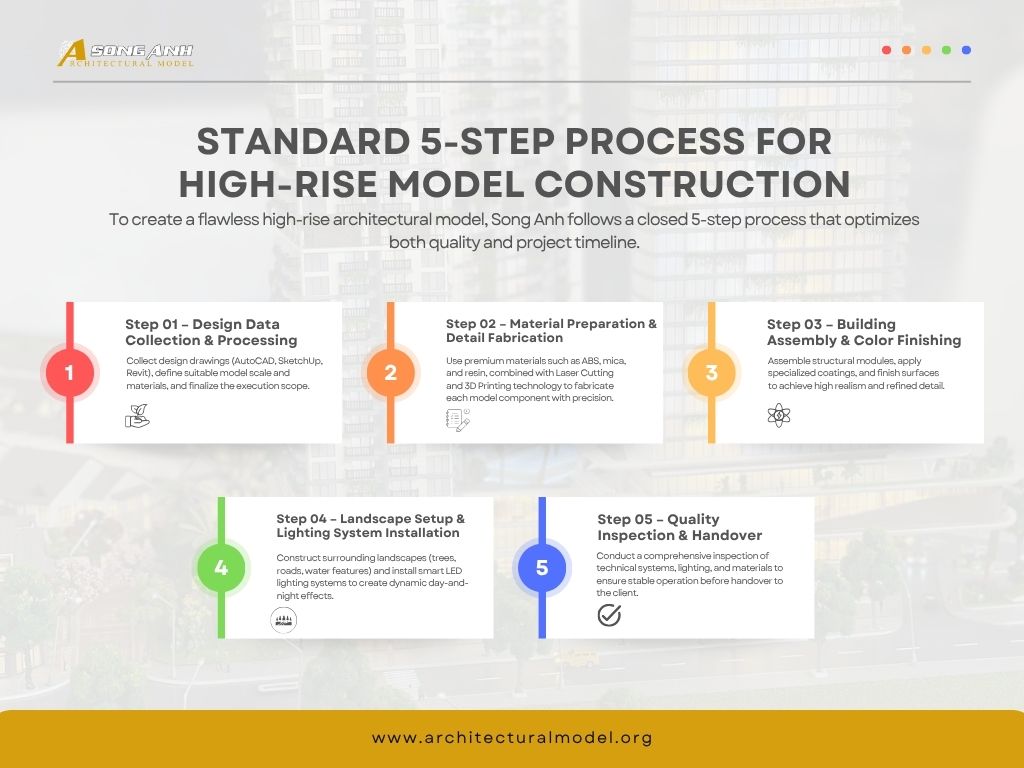
Step 1: Requirement Intake & Design Data Processing
- Receive design files (AutoCAD, SketchUp, Revit) and detailed requests regarding scale, colors, and simulation materials.
- Analyze data, determine suitable model scales (1:200, 1:500, or 1:1000), and finalize the project scope.
Step 2: Material Preparation & Detail Fabrication
- Use premium materials such as ABS plastic, specialized acrylic, or other professional architectural model materials at Song Anh’s Model Workshop.
- Apply advanced Laser Cutting and 3D Printing technology to precisely produce intricate architectural details.
Step 3: Building Assembly & Color Finishing
- Assemble high-rise modules according to structural design.
- Apply specialized paints and surface finishing for realistic material effects.
Step 4: Landscape & Lighting Setup (The Soul of the Model)
- Carefully construct surrounding landscapes (trees, roads, water surfaces).
- Install smart LED systems controllable by remote or app to simulate day and night lighting effects.
Step 5: Quality Inspection & Handover
- Conduct full inspection for accuracy, aesthetics, and electrical performance.
- Deliver and install the model at the display site, with full operation guidance.
Selected High-Rise Model Projects

Model of the Flatiron By Meridian building in Phnom Penh Cambodia
The Flatiron By Meridian building project is implemented and handed over in Phnom Penh, Cambodia. [...]
Jan
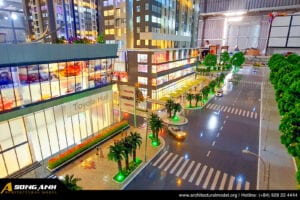
Apartment Model Scale | Toyota Phu My An in Hue
With potential development pouring into the central areas. Then apartment model scale in Hue | [...]
Aug

Architectural model of Hematology Hospital | Base 2
Architectural model of Hematology Hematology Hospital in Ho Chi Minh City is a great step [...]
Jun
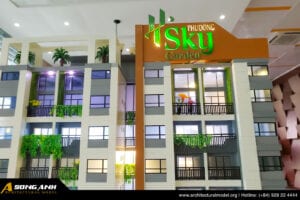
Phu Dong Sky Garden apartment model | Binh Duong | Latest project information
Phu Dong Sky Garden apartment model | In Binh Duong, a new apartment project named [...]
Aug
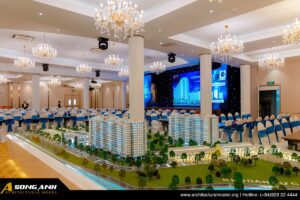
Conic Boulevard residential model in Binh Chanh
The model of Conic Boulevard residential area – of Conic investor is one of the [...]
Oct
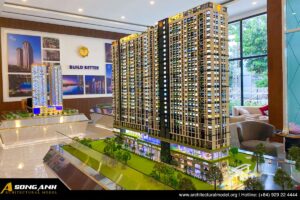
Model of Phu Dong Sky One Di An apartment building | Project details
Following previous successful projects, Phu Dong Sky One continues to be a promising and welcome [...]
Sep
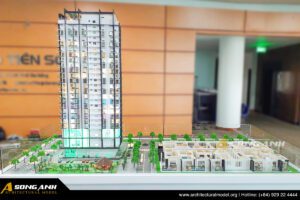
Condotel Center Point model in Danang | Model of high-rise architecture
High-rise model of Center Point Danang project | Project details | Progress Update | News [...]
Jan
FULL-SERVICE HIGH-RISE MODEL CONSTRUCTION QUOTATION [2026]
Determining the cost of a high-rise architectural model is one of the top priorities for every investor before starting a project. In 2026, with increasing competition in technology and materials, receiving a transparent and detailed all-inclusive quotation helps you optimize your budget and avoid unexpected costs.
Core Factors Determining the Cost of a High-Rise Model
The total cost of a high-rise model is determined by three main factors; therefore, a professional quotation should clearly break down these components:
1. Scale and Size of the Project
For display and sales purposes, the optimal construction scale for high-rise models usually ranges from 1:50 to 1:200. The choice of scale is deliberate:
- 1:50 – 1:100: Suitable for sectional or standalone tower models that showcase internal structures, finishes, and materials in high precision.
- 1:200: A balanced scale that effectively presents architectural exteriors, facade complexity, and key features while maintaining manageable overall model size.
The larger the scale (smaller denominator, e.g., 1:50), the higher the cost. This is because the level of detail increases significantly, requiring more labor time and high-quality materials for every floor, window system, and balcony. Conversely, smaller scales (such as 1:1000) are typically used for master planning models and cannot fully convey the architectural aesthetics of a high-rise project.
Architectural Complexity and Material Simulation
High-rise projects with complex façades (curved glass, louver systems, or special cladding) require advanced laser-cutting and intricate painting techniques. Accurately replicating premium materials (such as natural stone or metal finishes) directly impacts both material and craftsmanship costs.
Integrated Interactive Technology
The greatest added value comes from smart features such as programmable LED systems (scenario-based lighting), touch-interactive models (displaying project data upon contact), or integrated projection screens. These features not only enhance interactivity and engagement but also significantly increase the cost of circuit design and programming.